


fluent.com home page

    Contact Us
 

F1 Supercomputing: Unlocking the Power of CFD


By T. Larsson, T. Sato, and B. Ullbrand, SAUBER PETRONAS Engineering AG, Hinwil, Switzerlan

View the pdf of this article

View Larger Image
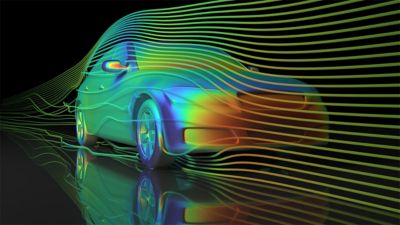
SAUBER PETRONAS C22 full car simulation at a 6° side-slip angle

The highly sophisticated body shape of a modern Formula One (F1) car is dictated by aerodynamic efficiency and performance. With numerous deflectors and external devices added, the coupling and interaction between the front-end and rear-end of the car have become strong. Minute changes in geometrical details or car set-up can have a significant impact on car performance and, therefore, result in success or failure. Such detail optimization is accomplished in wind tunnels, which an increasing number of F1 competitors run 24 hours a day to discover that last fraction of performance gain. This design process through physical testing is somewhat of a heuristic method, however, since the fundamental understanding and knowledge of the underlying physical mechanisms are not necessarily gained. The complexity and nature of F1 aerodynamics can only be fully understood through the use of advanced and highly accurate CFD simulations as well.

View Larger Image
Mesh resolution around a SAUBER PETRONAS C23 for a full car simulatio

Recently, the traditional vehicle development process (VDP) has been replaced with a modern approach that relies more on computational tools and simulations. In the early 1990s, the automotive industry used an average of 60 months for VDP. Today, most major automotive manufacturers are working towards a VDP of 18 months or less. This advance has resulted from a considerable effort devoted to the development of computational methods, providing guidance in the design of various components of modern cars. The introduction of unstructured grid technology, accurate and robust numerical methods, and the availability of powerful parallel computers have acted as catalysts in the rapid acceptance of these approaches.


Albert:A Linux cluster at SAUBERPETRONAS dedicated to CFD simulation

At SAUBER PETRONAS, new investments in a wind tunnel and computing hardware have allowed the company to explore in depth some of the most subtle flow phenomena responsible for fundamental changes in car behavior, handling, and performance. For example, a front wing analysis conducted using a relatively simple model just a few years ago was only capable of evaluating front wings. As interest broadened beyond the evaluation of the front wing itself, a new model was developed that allowed not only front wing analysis, but the downstream flow field as well, to further understand the impact of the front wing and its devices on the trailing car bodywork and components. A careful meshing strategy was needed to capture wakes and vortices, which was critical for the task. The new meshing scheme provided improved surface and surrounding flow field mesh resolution with a manageable cell count. The original model intended for front wing analysis is now a fully detailed model. Even with double the cell count, the new model runs in less than half the time on the new computing system.

As another example, early in the 2003 season, it was recognized by the team that the C22 race car suffered from some aerodynamic shortcomings while cornering. The race car was found to be sensitive to changes in side-slip angle (yaw), and it was immediately understood that the rear-end of the car was losing too much downforce while going into low-speed corners. However, despite extensive wind tunnel testing, the root of the problem remained somewhat unclear. The wind tunnel used at the time offered limited capabilities for testing at yawed conditions and only angles up to 4.5° were achievable.

To gain further insights into this complex aerodynamic subject, it was decided to conduct a highly detailed CFD analysis. It had been demonstrated on several occasions, through both wind tunnel measurements and track testing, that only minor geometrical changes (to the front wing endplate or details in the front wheel assembly, for example) could have a global impact on the overall vehicle aerodynamics, clearly revealing a strong aerodynamic interaction/coupling between side-slip angle the front-end and the rear-end of the car. To fulfill such demands, the final hybrid mesh used in this study reached almost 100 million cells.

From the resulting simulations, valuable results were extracted that helped to better understand the cause of the vehicle yaw sensitivity. Clearly, and with no surprise, the front tire wakes were detrimental for the rear wing performance in yawed conditions. The oncoming flow conditions were found to be significantly affected by the front tire wake being shed onto the rear wing. Furthermore, the CFD simulations revealed some very interesting flow characteristics that would have been virtually impossible to detect in a wind tunnel. Moreover, a few details of the underbody were redesigned based on the simulation results, which also translated into quantifiable performance gains on the race track.

These CFD findings were vital for decisions on the development directions, and a completely revised rear-end bodywork including more efficient deflectors were successfully developed in the wind tunnel during a very short time frame. The car with the new bodywork was first raced at the U.S. Grand Prix, where the SAUBER PETRONAS pilots Heinz-Harald Frentzen and Nick Heidfeld finished in 3rd and 5th place, respectively.

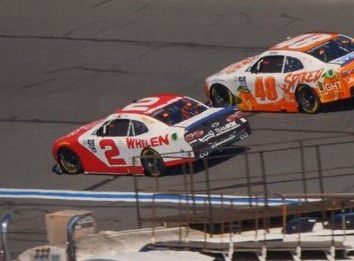
In addition to the complex steady-state simulations described above, even time accurate simulations of race car dynamics are now within reach at SAUBER PETRONAS. One application currently being studied is that of overtaking maneuvers. Transient flow simulations such as these can ultimately bring new insights into the aerodynamic interactions of competing race cars running at a wide range of conditions.

Aerodynamics simulation around a SAUBER PETRONAS C23

Further Reading:

  1. Akanni S.; Larsson T.; Bienz C. Numerical Modelling of the Aerodynamic Flow Field about a Formula One Car; Fluent User Group Meeting, Germany, 2001.
  2. Bienz C.; Larsson T.; Sato T.; Ullbrand B. In Front of the Grid – CFD at SAUBER PETRONAS F1 Leading the Aerodynamic Development, 1st European Automotive CFD Conference, Bingen, Germany, 2003.


Previous Article FluentNEWS Next Article